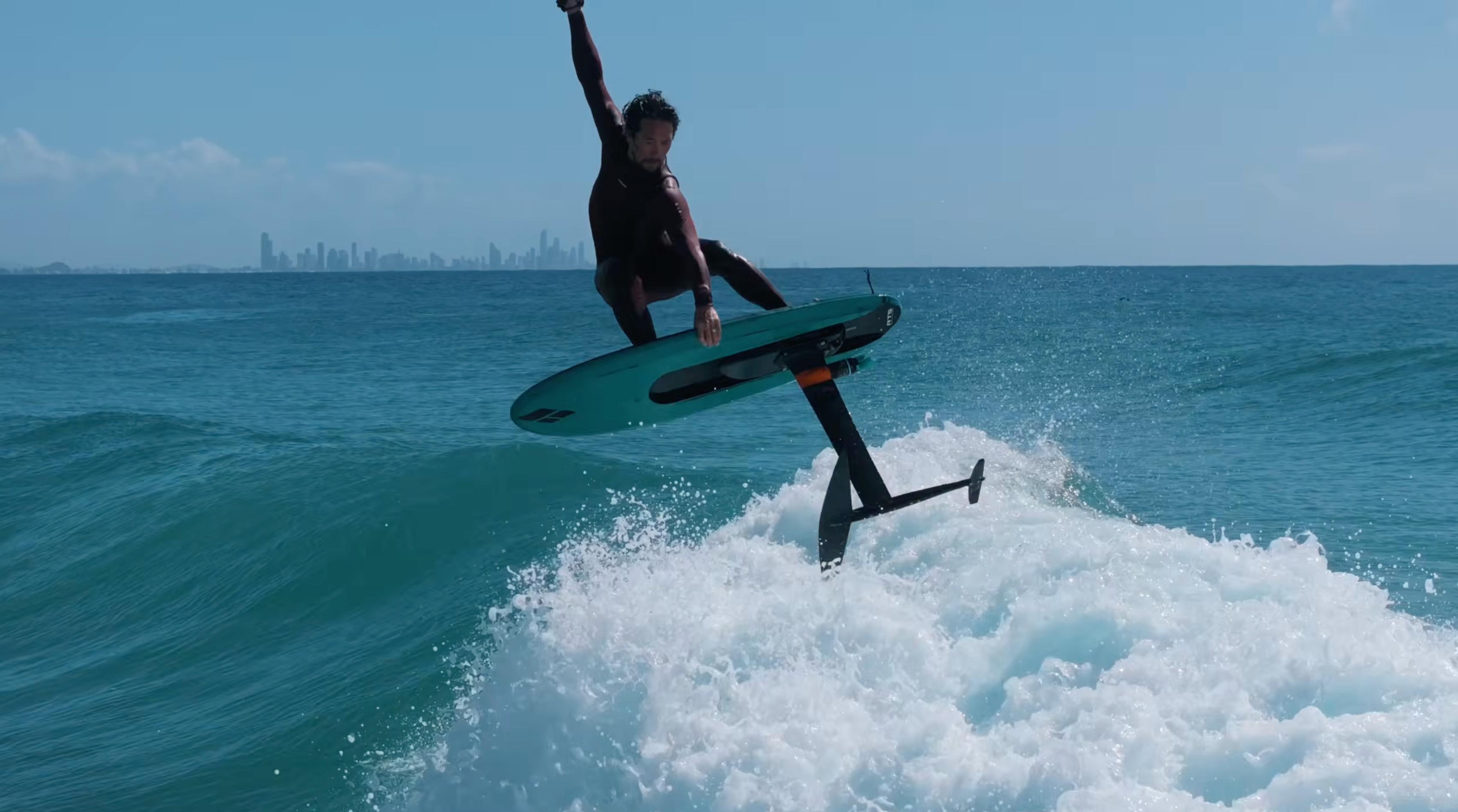

Inside the Factory: The Story Behind the KrUzer V2 RTS
Amos Shapes is based in Ballina, on the north coast of New South Wales. The region is famous within the foil community for incredible foil waves - Wategos in Byron Bay, just to name one, with plenty more up and down the coast. Amos has been shaping for around 15 years and foiling for about 10. He started building his own foilboards and self-teaching himself carbon vacuum bagging - a skill that takes years of experience to refine.
Amos Shapes is a small, family-run operation: Amos and his partner Jess run it together, with Jess handling customer service, marketing and overseeing shipping and logistics, and three full-time staff now working across two factories. Alongside the foil board range, the team also builds surfboards for other shapers around the region and overseas. Hydrofoil boards remain the main focus.
Building what you ride
Amos rides the equipment he builds, and works closely with continued feedback from riders to design boards. All of our fully sponsored riders were riding Amos boards before they were part of the brand, so the relationship started with feedback rather than sponsorship. As the sport has grown, that's turned into a deliberate approach: ask riders what they actually want to ride, and let that steer the model range.
The KrUzer is the clearest example. Josh started riding with Amos Shapes about three years ago, beginning with a prone board that quickly evolved into a mid-length. The board's popularity grew from there - Amos puts it down to a shared understanding between designer and rider about what the board needed to do. That same platform turned out to suit Foil Drive riding as well as proning, and as Foil Drive use grew among riders, it led directly to the RTS range: KrUzer models built specifically around a Foil Drive system rather than adapted after the fact.
The V1 RTS, built around a full-depth trench to fit Foil Drive's Max battery at the time, became one of the brand's most popular models.

Why the V2 RTS has a half trench
The brief for the Kruzer V2 RTS wasn't a redesign — it was a refinement based on what Josh wanted to feel more of on the water, with keeping the board thin as the main priority.
The V2 RTS comes in two trench options, built to the same dimensions: Pro (1" / Half Trench) and Regular (2" / Full Trench).
Josh's brief for the Pro was to get the board as thin as possible. The full-depth trench from the V1 was replaced with a half-depth trench, around 1 inch, long enough that battery changes are still quick — slide the battery out, slide a new one in, done - but shallow enough that the board sits noticeably thinner than the V1, with the battery proud of the deck. According to Amos, feedback on the half trench from riders has been entirely positive.
The Regular keeps the full 2-inch trench, sitting the battery flush with the deck, and carries a little more volume through the same footprint - more buoyant, easier to paddle, and built for riders who aren't chasing the thinnest possible board in every session.

Where the Josh Ku collaboration started
Amos first came across Josh through a short clip of him foiling, new to the sport at the time, but clearly hooked. Not long after separately seeing footage of him surfing big waves in Sydney. A phone call followed, then a conversation about building a board together. What made the collaboration work, in Amos's view, wasn't just Josh's riding - it was that they were both genuinely enjoying the sport at the same stage, which made it easy to understand where the other was coming from. Three years on, Josh has become one of the brand's main team riders and a visible presence in the wider foiling community, running lessons and coaching clinics alongside his own riding.
That day-to-day contact with other foilers matters for design. Josh isn't only riding the boards himself - he's out coaching and talking to a broad range of foilers, which feeds real-world feedback back into the design process. Amos describes him as the link between the people riding the equipment and the people building it, which keeps board decisions grounded in what a wider group of riders is actually feeling, not just the team's top riders.
How the wider range responds to rider feedback
That same feedback loop shaped the direction of the original KrUzer. At the time Josh started experimenting with it, most riders were on much shorter boards. Customers were telling Amos Shapes the shorter boards rode well but were hard to catch waves on — less fun, more effort. Testing showed that riding a slightly longer board came at little cost to performance, while making waves noticeably easier to catch across a wider range of conditions - no need for perfect timing or positioning just to get up. That combination is what drove the KrUzer's popularity, and Amos frames it as part of a natural swing back after the sport had pushed toward short boards as far as it could.
The same responsiveness applies more broadly: when a foil brand releases a new foil, or a rider wants to try something different in their setup, the small size of the operation means the team at Amos Shapes can adapt a board relatively quickly rather than waiting for a full model cycle.

Built by hand, in-house
Boards start as an EPS blank out of the machining stage, but the finishing work - hand finish shaping, gluing up inserts, trench cutting, track installation - all happens on site by hand. Amos is direct about why: CNC machines aren't always as accurate as they need to be, so measurements, trench lengths and routing are done in-house rather than left to the machine. From there, boards move through glassing, sanding, finishing and packing. A significant and growing part of the business now is packing and shipping boards overseas, to a customer base the team describes as genuinely global.
That standard is also behind a deliberate call Amos has made not to move into overseas production. Amos Shapes stays a small-batch operation, building every board in-house rather than scaling up through offshore manufacturing, because it's a business built on quality over quantity. Production capacity is 15 to 20 boards a week, and new model releases tend to push wait times out further. Amos's stated approach to that trade-off: he'd rather build 10 boards done properly than 20 built to a lower standard, and asks customers to bear with the wait on knowing they will receive a beautiful board.
Behind all of it, Jess runs the side of the business that keeps it moving - customer service, marketing and overseeing shipping and logistics - the point of contact most customers deal with directly, while the factory floor stays focused on building.
Check out our latest YouTube Video chatting with Amos about the Amos Shapes story, working with Josh Ku and the evolution of the Kruzer range.
Shop the Kruzer V2 RTS>